Naming conventions in Rílin: names of people

I have been thinking a lot lately about names. In a language, names have a variety of ways they may manifest. Some are derived from older words in the language, some are identical to contemporaneous words, and some need certain morphology to indicate that they are, in fact, names, and not just regular words.

Rílin Given Names

In my various conlangs, I’ve taken different approaches to naming people. In Rílin, for example, there are specific name morphemes that mark a word as a person’s name. Some of these are gender specific, and some are gender neutral. Some have roots are traceable to either Rílin or Old Rílin words, but some do not have even discernable meaning. Below are some examples.

Feminine Names

Some feminine name suffixes include: -tót, -í, -u, -in/-ín, -ló

The following names are all derived from contemporary Rílin words, which become names with a suffix. (You can click on each name to hear it spoken.)

Bishéín [ˈbɪʃein] – from bishé ‘bright’
Esuí [ˈɛsui] – from esu ‘griffin’
Fylûlatót [fyˈlʌlatot] – from fylûla ‘bird’
Ítshaló [iˈtʃalo] – from ítsha ‘luck’
Kisin [ˈkɪsɪn] – from kis ‘honeybee’ or maybe kis ‘slender’
Mímin [ˈmimin] – from mím ‘cute, little’
Nesú [ˈnɛsu] – from nes ‘graceful’

 -tót-in/-ín-ló
bishé ‘bright’   Bishéín 
esu ‘griffin’ Esuí   
fylûla ‘bird’Fylûlatót    
ítsha ‘luck’    Ítshaló
mím ‘cute, little’   Mímín 
kis ‘honeybee’   Kisin 
nes ‘graceful’  Nesú  
Various Rílin word roots paired with naming suffixes can create names. These names are specifically feminine names.

Not all Rílin names have clear or discernible meanings. They may still include some of the typical suffixes, but when detached from the rest of the word, that series of sounds does not necessarily make up a Rílin word.

Änsu [ˈænsu]
Äshtín [ˈæʃtin]
Alaí [ˈalai]
Bûlaísí [bʌˈlaisi]
Nímu [‘nimu]
Silin [ˈsɪlɪn]
Tsilu [ˈtsɪlu]
Tsheló [ˈtʃɛlo]

Masculine Names

Some suffixes are masculine, such as -n, -ó, -a, -ret.

Awun [ˈawun] – from awu ‘upright’
Bynóret [ˈbynoɾɛt] – from bynó ‘morning’
Daghóra [daˈɣoɾa] – from daghóra ‘sacrifice’
Evekaret [ɛˈvɛkaɾɛt] – from eveka ‘streak, brook’
Fífaía -[fiˈfaja] – from fífaí ‘advantage, benefit’
Gómó [ˈgomo] – from góm ‘thought, mind, know’
Kér̂a [ˈkeʂa] – from u ‘step forward, put (oneself) forward’

 Some names may use naming suffixes but have indeterminate root meanings.
Ekhéla [ɛkˈhela]
Feneret [ˈfɛnɛɾɛt]
Gíŕan [ˈgiʐan]
Kedûn [ˈkɛdʌn]
Pirór̂nó [pɪˈɾoʂno]
Shíburet [ˈʃibuɾɛt]
Óŕina [oˈʐɪna]

Gender Neutral Names


Other name suffixes are gender neutral, such as -ja, -bí, and -tos. These could be used for a person of any gender. Some of these names are very old and no longer have clear roots.

Béíntos [ˈbeintɔs] – unknown root
Ískesébí [iskɛˈsebi] – from ískesé ‘high, tall’
Jenja [ˈjɛnja] – probably from jen ‘day’
Kótos [ˈkotɔs] – maybe from ‘intention, meaning’

Other names may not include a suffix at all. Most of these names can be used regardless of gender.

Amlim [ˈamlɪm]
Köle [ˈkølɛ]
Ŕetsŭ [ˈʐɛtsɯ]
Nemne [ˈnɛmnɛ]
Valhén [ˈvaɬen]

Rílin Family Names

Rílin family names come after given names. Names are inherited by children from their parents. Female children inherit their mother’s name, and male children their father’s name (typically, although there are exceptions to this). Therefore, they are somewhat matronymic and patroymic in function, although they also act as family names since there is no other inherited name for most Rílin people.

For example, Silin, a middle-aged Rílin woman, would have her mother’s last name, Bízunla. Her husband, Nósh, would have his father’s name, Ínómí. Their son would take his father’s name too. Family names often concern personal traits, origins, trades, and skills. Bízunla comes from bízun ‘alarm, alert’, with a possible agentive suffix -la. So the original meaning might have been “one who warns or foretells”. Ínómí looks like the word ínó ‘color’ plus a genitive suffix –, so might mean “with color, of color”. This could either have originally referred to a personal trait (some color of the body–hair, eyes, skin, or even clothing) or it could have referred to a colorful place of origin, like a green forest or floral garden, etc.

These are just a few points concerning Rílin naming conventions. In the future, I will write a bit about Rílin nicknames as well as expand on naming conventions of other cultures across Aeniith. Thanks for reading!

Translation practice in Rílin

I’ve been doing more practice translation for Rílin, to fill out any needed grammatical or lexical gaps. Here is a recent one, taken from here.

English: “That is the city of the Goyanim. They are a strange people. They light their cities at night, as if the stars weren’t sufficient for their needs. They fight and kill each other, not realising the greater danger beyond their small world. And they do not hunt each other with bows and arrows. No, they have strange devices that kill from far away without arrows. And take care near their strange iron horses they use to travel. They travel faster than any natural beast ought to, and ignore the strength of the bow and arrow. Best if you avoid their cities, my son.”

Rílin: “Tañ yẃäp Góyanimenmu. Be’a li apen. Xavéjalapen tañ yẃäpet bänkasla, do be hyzû bín kuan. Ŝílapen apenset a zansalapen. Be mílulapen bí gaŝ krur̂ûet dexe ẃy kalumla apenmu. Be siŝulapen apenset kótûñla a ítäla. La, lykylapen be’a mönet baes zansalapen róŝó ŝa ítänla. A toroky né lí mu be’a ǵasíaínla zar̂mí baet lykylapen níñgíle. Zaílapen psötar̂ó dexe gölhañ ŝutréla, dexe lhyntíla kótûñmí a ítämí. Ptatí histä tañ yẃäpenet, mävû.”

I imagine a Rílin father telling his son about a culture with more advanced technology (possibly Tosi?). I may do an interlinear gloss but for now, it stands as-is. More to come.

Rílin language: expression of sorrow and sympathy

Well, it’s been a while! I do want to get back in to posting things here, despite my busy workload. Maybe it’s even better for me to do so because of that workload.

Anyway.

In light the recent catastrophe in Paris, I have been thinking about how the Ríli form expressions of sorrow, sympathy, condolences, etc. Languages often have formalized/idiomized or set phrases for these kinds of expressions, so I thought it was important that Rílin did as well. Rílin culture emphasizes harmony, support, respect, and sensitivity to others’ emotions, so I wanted to make their phrases of sorrow and sympathy reflect some of those values too. All of the words and grammar used herein are extant parts of the Rílin language–I am configuring them in ways that seem appropriate.

Note: the variations on the way of saying ‘you’/’your’ are due to traditional Rílin’s (and Lunauli Rílin) way of distinguishing three levels of formality/familiarity for pronouns and persons (lí at the most familiar and zana at the most formal for ‘you sg.’).

Lilaíkim – ‘I am grieving/mourning/crying’ (this word lilaí also means to weep copiously)
lilaí-k-im
/lɪˈlaikɪm/
grieve-pres.prog-1sg

Lilaíkim líu/xyu/zanau – ‘I grieve with thee’
lilaí-k-im lí-u/xy-u/zana-u
/lɪˈlaikɪm ˈliu (ˈxyu) (ˈzanau)/
grieve-pres.prog 2sg-instr

R̂yla límu/xymu/zanamu imi – Lit., ‘I am in/with thy sorrow’
r̂y-la lí-mu/xy-mu zana-mu imi
/ˈʂyla limu (ˈxymu) (ˈzanamu)/
sorrow-instr 2sg-poss

Hestia(tíí)/(tyy)/(taa)ky – Lit. ‘may you recuperate/rest’
hestia-t-íí/t-yy/t-aa-ky
/hɛstɪaˈtiiky (hɛstɪatyyky)(hɛstɪataaky)/
rest-npst-2sg.fut-irr

Bítapky Démas/Ifinŝas líet/xyet/zanat – ‘May Déma/Ifinŝe embrace/aid thee’ (depending on which goddess you would like to reference)
bí-t-ap-ky Déma-s/Ifinŝe-as lí-et/xy-et/zana-et
/biˈtapky ˈdemas(ɪfɪnʃas) ˈliɛt (ˈxyɛt)(ˈzanat)/
embrace/aid-npst-3sg-irr Déma-erg/Ifinŝe-erg 2sg-abs

Image of a Rílin woman: Silin

Commissioned art of a Rílin woman named Silin. Free Image Hosting at FunkyIMG.com (Please click the image to see the full size version! It looks squished when I insert it here.)

Silin is a scount with the Sunulí guerilla militia. She spies on the Tosi encampments and is an expert tracker of the woods. Her home settlement was destroyed in the initial Tosi attack on Rílin border towns, and Silin’s husband and young son were murdered. She wandered for a few years and fled to the northern coast of Elinís̆. It was here she met Tsilu, another Rílin woman who had fled the invasion, and they became friends, and eventually lovers.

I want to write stories about Silin, but I have three WIPs going right now that need to be dealt with first!

More places moodboards…

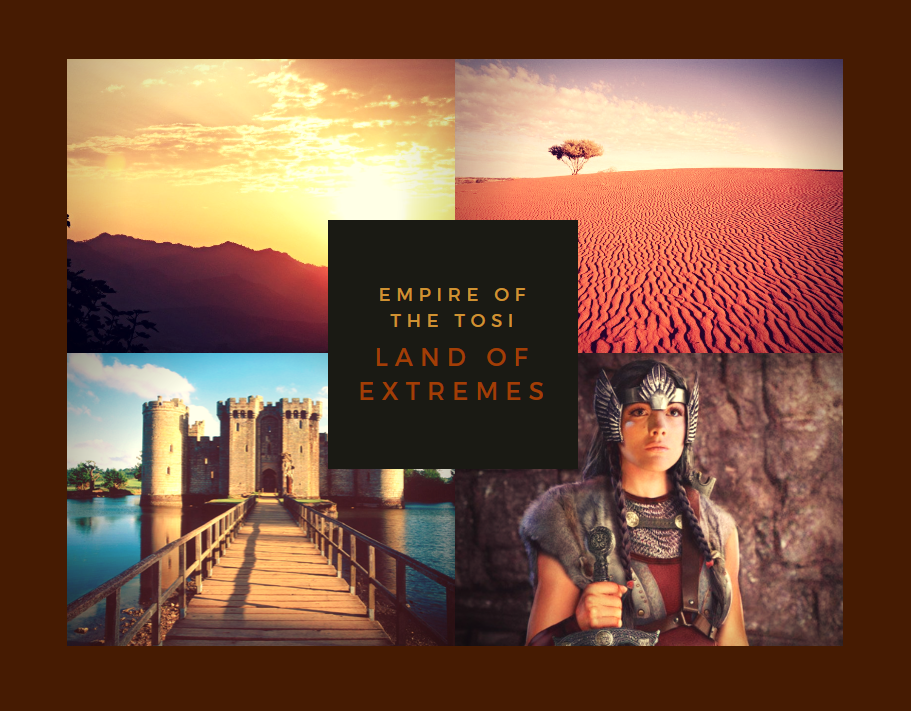
More moodboards for places in Aeniith. The Tosi Empire (mostly warm and arid, large, lots of military forts and castles and such, female-ruled society, imperialistic, etc), and the Rílin forests of northern Izoi (same continent mostly): cool, green, good for hiding, and actually toxic to most non-Ríli. The Tosi invaded them anyway for resources but the Ríli will eventually win this long war for their homeland, though not without great cost.


tosimoodboardrilinmoodboard

Upcoming works are brewing…

I’m writing some mini-stories about Orikrindians that I will probably post in the future. Topics may/will include:

– An Orikrindian girl who leaves her country at age 15 and moves to Quarios, some of her thoughts, motivations, and memories (telling her story in retrospect)

– Two Orikrindian brothers who are separated due to a war with a neighboring country

– A story of the devotees of the mountain goddess and fire god who go on a pilgrimage to a great mountain. Fewer will descend that those who went up

I’m also recording new poems in Rílin now, since I am finally back in touch with my h4n Zoom audio recorder, which is higher quality than my laptop mic, unsurprisingly.

Other topics in the works: more Ori grammar, the Orikrindian pantheon, and info on Orikrindian artisanal works.

This has been a semi-update with a bunch of teasers…but I’m really excited about what I’m working on so it’s ok. 😛

Mintaka

A song in Rílin (Bve Pfa R̂í)

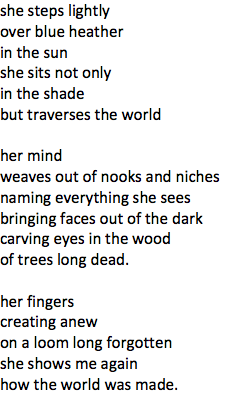
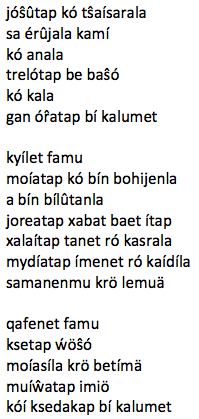
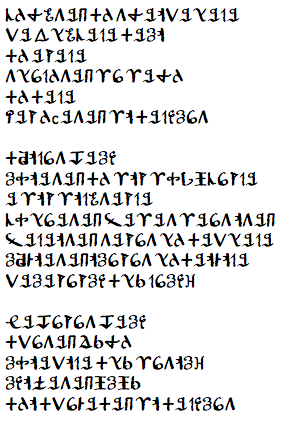
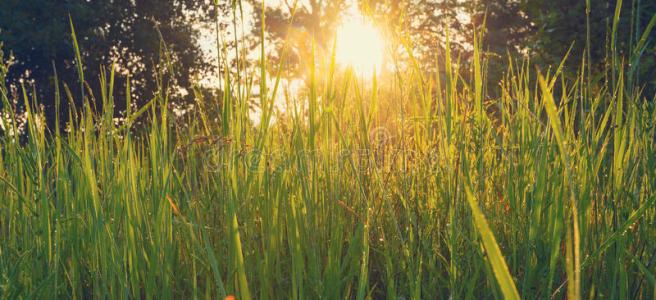
So this is a song I recorded a long time ago (like ten years ago lol) that I wrote even longer ago in Old Rílin and Rílin. I was originally inspired by the lush vegetation in southern Georgia when I was visiting there a long while ago. The first verse is in Old Rílin and the rest in Rílin. I imagine it could be from the perspective of a Ríla visiting a southern country (as they are native to the northern half of Izoi and thus would not have experience with certain types of biomes, perhaps being very impressed by certain plants and trees as I was).
Composition, vocals, and lyrics are all by me. Piano arrangement and performance credit goes to Eric Barker (www.ericbarker.com).

http://www.whitealicemusic.com/music/BvePfaRi.mp3

Lyrics are below:


Bve Pfa R̂í

(old Rílin)


Bve Pfa R̂í

/bve pfa ʂi/

tree blue yearn

‘yearning green’


Goxe

/goxe/

stir

‘stirring’


bi-ly

/bi’ly/

seed-push

‘seeds springing forth’


bil-i

/bi’li/

innerground-wet

‘moist soil’


naqa r̂í

/naqa ʂi/

gentle yearn

‘gentle yearning’


na genk

inf sleep

‘to sleep’


re kanad

/ɾe kanad/

out.of forest

‘out of the forest’


be

/be/

smile

‘a smile’


(modern Rílin)


Phala tösh

/ɸa-la tøʃ/

air-instr ash

Ash in the air


Aghu

/aɣu/

Blind


Wunís myrûí

/wunis myɾʌi/

breath burning

Breath burning


(instrumental)


pilu ní

/pɪlu ni/

center.of.flower clear

Clear center of a flower


uka

/uka/

Companion


Be ŕíky zöet

/bɛ ʐi-ky zø-ɛt/

neg expel-imp trust-abs

don’t expel trust


Despyxa

/dɛspyxa/

Paper of tissue


Moías

/mɔias/

Tapestry


Kaíkr̂ŭ ŝala

/kaikʂɯ ʃa-la/

warmth.from.light petal-instr

Warm light through the petals