

Or should I say: kyílaíkim!
It’s been a while! I have been involved in so many things recently, not least of which was finishing my PhD in December 2022! Now that I am now longer writing my dissertation, I have more time.
What is new in Aeniith?
Well, I began some preliminary work on a non-linear, multi-modal writing system. I also structured a language that it is used for, although only the basics of that are done. The orthography is based on shapes, color, and other features of abstract pictoral representations. Essentially, different morphemes of this rather agglutinative language are represented variously by shapes, colors, etc. featured in what are basically pictures. There is a basic template, onto which different additional shapes in different colors can be added. These add the “flavor” of the verb, which is the inflectional morphology.
Below, you can see the verb root, which is written in a syllabary, below the “morphological seed pod”–the non-linear portion–which adds morphology to the root. For the first picture, the word written is ahkmaunier ‘you’re swimming’. The root is mauni ‘swim’, which is written in black near the bottom. The purple sides mean ‘indicative mood’, the green is ‘present tense’, the rising sprout shape is ‘continuative aspect’, while the red outer edges indicate the 2nd person singular ‘you’. In terms of the break down of the sounds of the verb, you can find it below:
a-hk-mauni-er-∅
prs-cont-swim-2s-ind
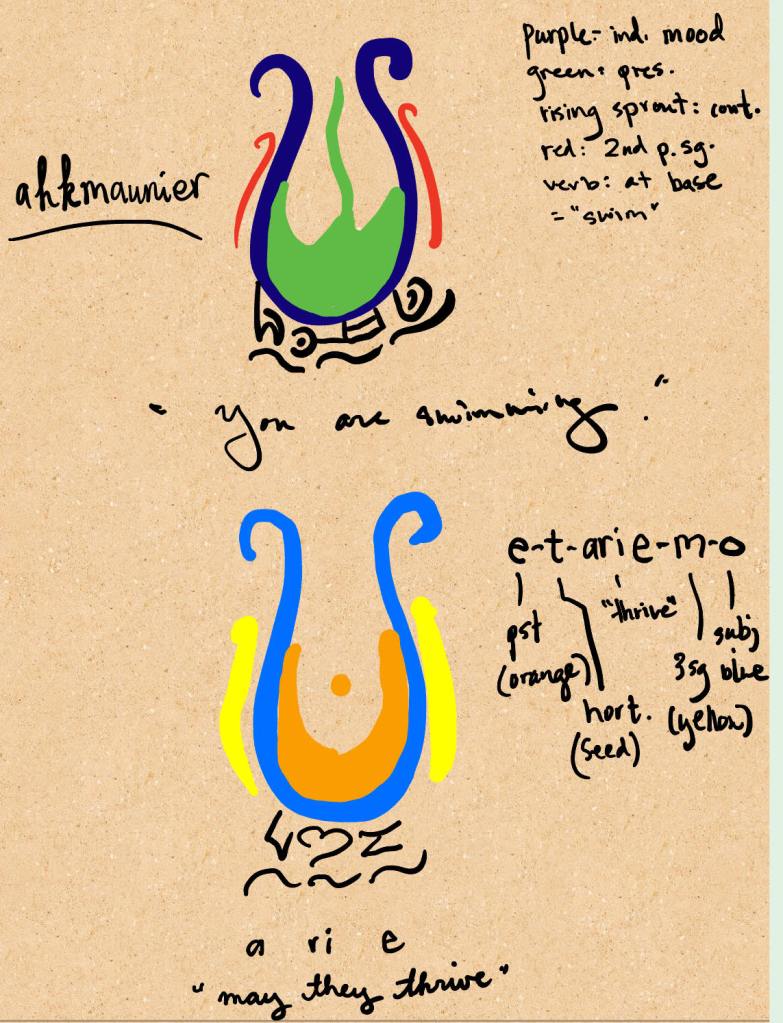
The next picture, just above, represents the verb “may they thrive”. The same basic shape is the same–see the verb root written in black at the bottom. The colors and internal shape are different though. The past tense e- is represented in the orange. The hortative morpheme, -t- is represented by the seed dot in the center. Yellow sides represent the 3rd person singular, while the subjunctive mood –o is indicated by the blue color of the basic “pitcher” shape.
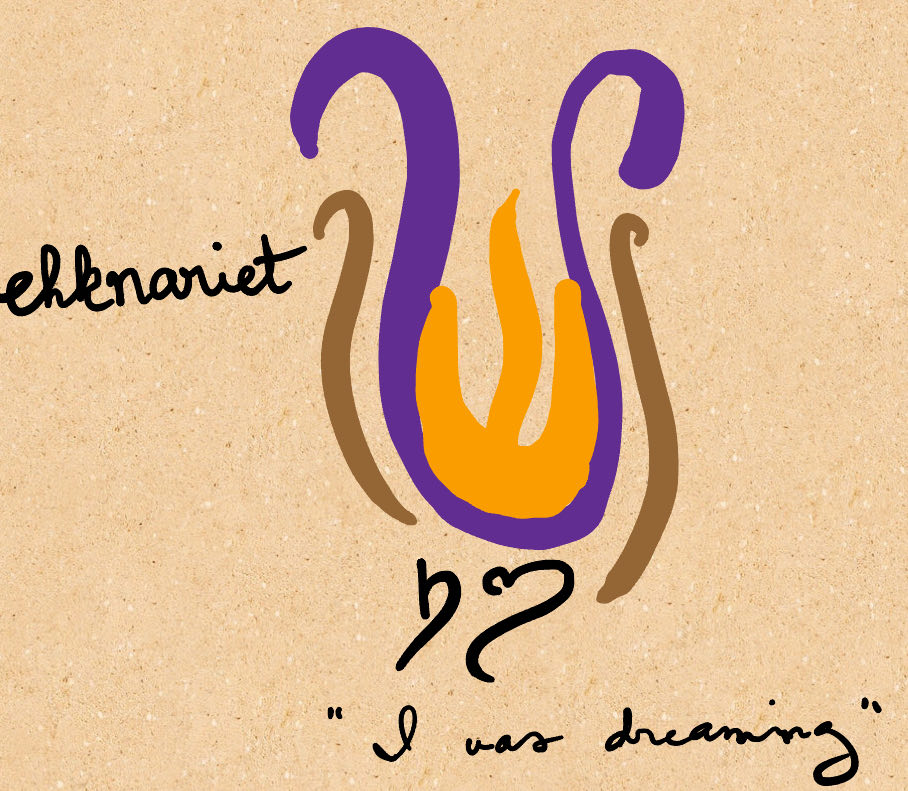
Now above, there is another example. This time, the root is nari- ‘dream’. The basic color purple indicates, again, the indicative mood, which is zero marked in this language. e-, the past tense, is represented by the center orange color. Continuative aspect -hk– is clear from the rising sprout shape. The brown sides indicate 1st person singular -(e)t.
e-hk-nari-et-∅
pst-cont-dream-1s-ind
‘I was dreaming’

Here is another example. This one represents the word ahkrōtaiam ‘he is sowing seeds’, with some additional phonological and phonetic representationss: /aʰkroːˈtaiam/ [aʰkɾoːˈtajəm]
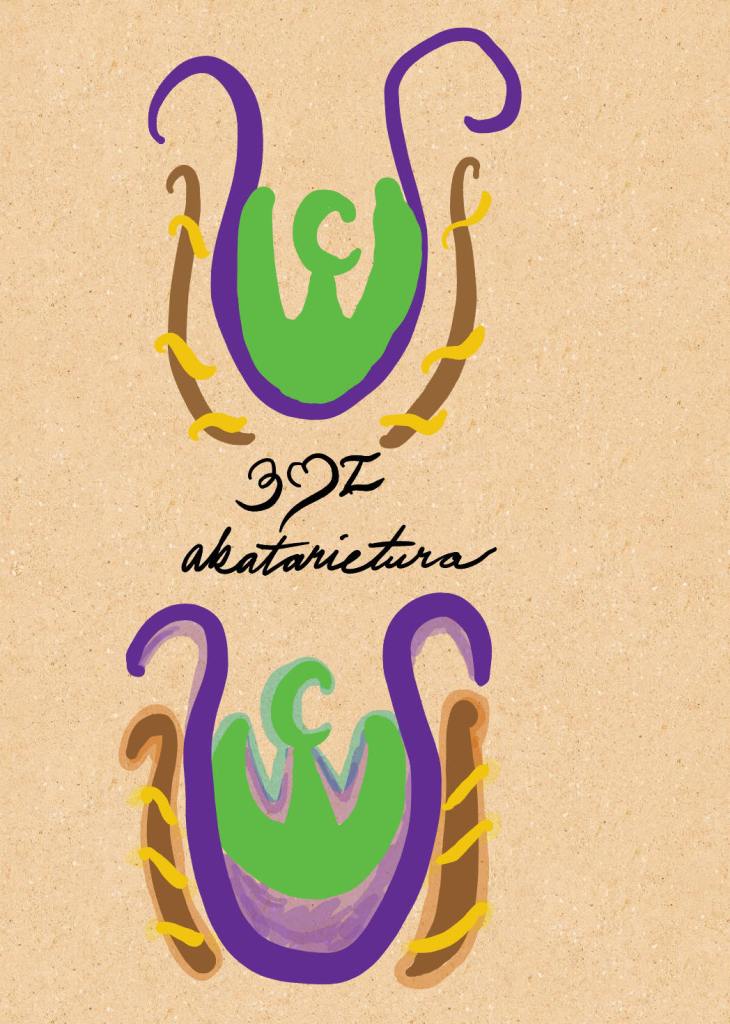
Here is another verb, akatarietura ‘I want to care for you’. This verb incorporates object marking, which is demonstrated by the yellow vines that wrap around the outer brown ‘petals’. The upper version is simpler, while the bottom version is a little fancier.

Above is a breakdown of this same word, with another version of it written/drawn. Also included here are a morphemic gloss of the word, and some examples of verb roots.
prs-vol-A-care.for-1s-2s-A
a-k-(a)-tarie-t-ura-a
akatarietura
‘I want to care for you’
I will likely be expanding this system, as well as the language it was created for, in the next few months. Stay tuned.
~Mintaka

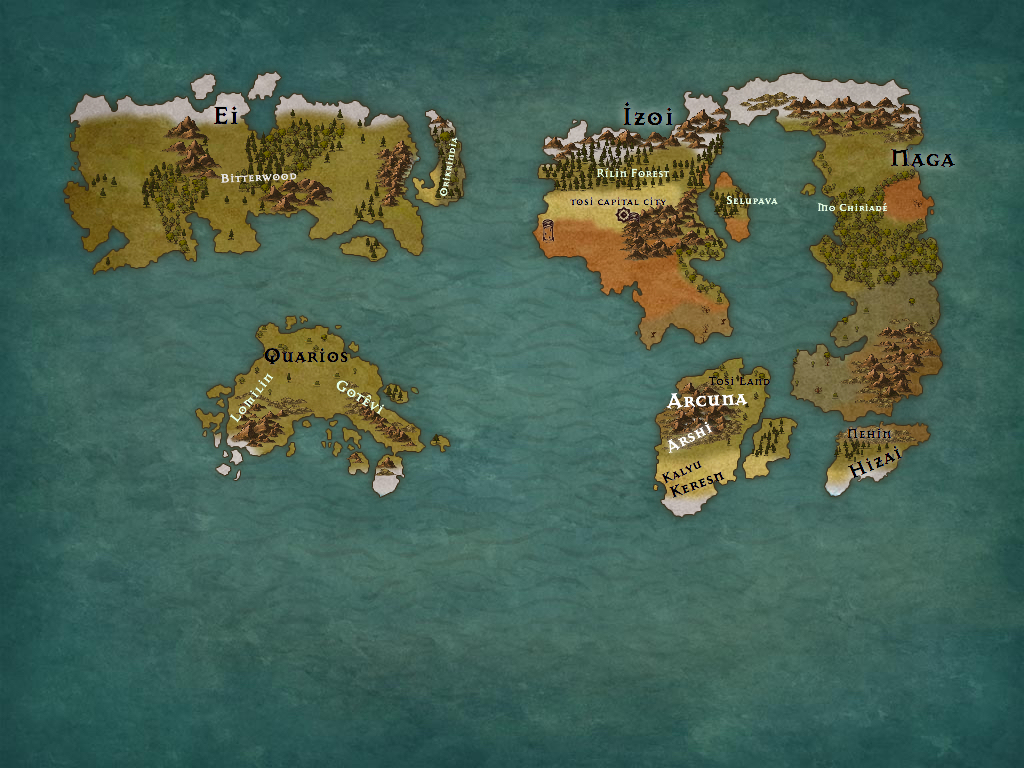

 Aeniith: A Constructed World