WIP: Crypt of the Mind

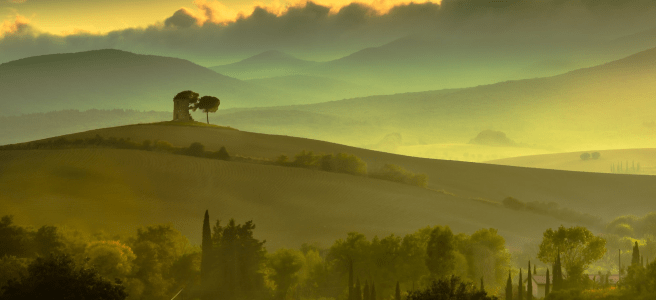
This is a short story about a Tosi guy named Kel whose older sister Koma decides to leave and join the war with the Ríli. Because Tosi society is a matriarchy, it’s not common for young men to be living on their own (especially in middle class homes like this one), and he feels abandoned by his sister and worried for her safety. Soon, he finds that the strain of being left alone is aggravating some mental problems he’d had in the past. Problems increase for Kel when he starts to discover some unsettling facts about his family’s past, and discovers that his ancestral home may be haunted by secrets unknown, both figuratively, and maybe literally.

Genre will be fantasy/scifi/paranormal with tinges of romance and adventure. Rating is at M for now just to be safe. Nothing to warrant the rating so far though. CWs for mental illness, mild violence, mentions of death, mild sexual themes, and paranormal scariness.

Feedback is welcome if you feel like reading!

~~~~~~~~~~

Continue reading “WIP: Crypt of the Mind”

Voagry Treir

Moodboard for Voagry Treir :

Screen Shot 2018-08-27 at 4.37.26 PM

Before me stood a woman in a flowing green gown, with pearls draped at her breast like dew on a flower. Her eye seemed to glow in the low lamplight and the flicker of the fire cast orange shadows over her skin. She was pale, much paler than most people in norther Quarios, and I wondered where she’d been born. She could have looked Orikrindian if not for her great height. She was one of the tallest women I had ever seen. Her gold hair ran in a river down shoulders that were broad and stately. In her face was an incomprehensible peace, of such a nature that I was sure I had never felt so serene once in my short lie. At that moment, I felt a piercing pain in my heart, both sweet and agonizing, and it occured to me that this woman seemed, to my naïve heart, like a god.” 

Elucuna in Quarios

~~~

I am still working on Elucuna’s story, but I wanted to take this excerpt from the upcoming section to use for Voagry’s moodboard, because Voagry is one of my oldest OCs and one of my personal favorites. ❤

~

Also I promise to post more real content again soon. Grad school is starting up for me again and I have more work! I am going to keep worldbuilding, conlanging, and writing over the semester (as I always have) because it a great stress-reliever for me. And god knows I could use that.

Yet more places moodboards

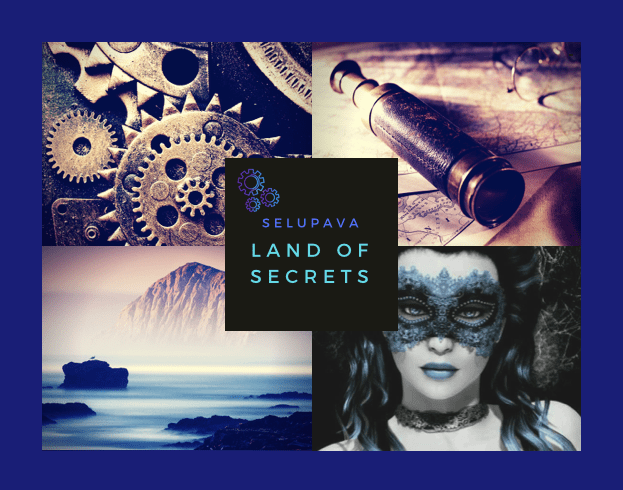
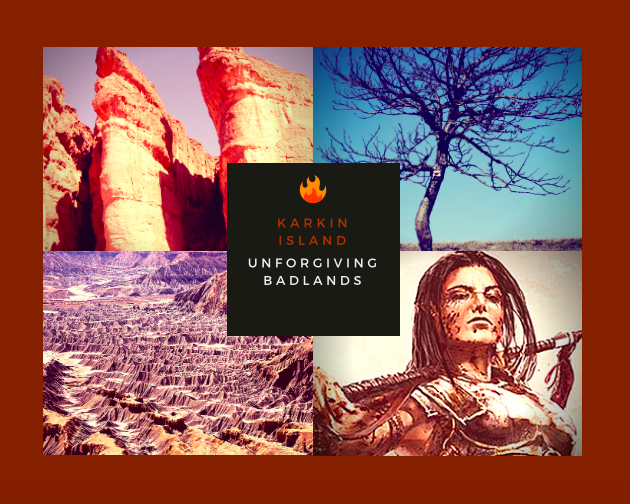
This time for the Karkin (on Karkin Island, which they partially share with the Selupa), and Selupava, the land of the aforementioned Selupa. They are both of the zuna race but they are very different. The Selupa are probably the most technologically advanced group in Aeniith, having invented the steam engine and an early version of muskets, as well as currently toying with designs for simple underwater suits/masks (gasp). Their government is very secretive however, and all of their tech is a tightly guarded secret as well.

The Karkin have seven city-states ruled by different clans that are usually at war with each other. Beyond the cities, the land is rather lawless. Anarchy reigns in many places, and life is very tough. The central part of Karkin Island is also less resource-rich than the Selupa-owned regions, and most people struggle to survive. It is a harsh life amongst the Karkin.

Screen Shot 2018-08-25 at 12.01.02 AMScreen Shot 2018-08-25 at 12.00.49 AM

More places moodboards…

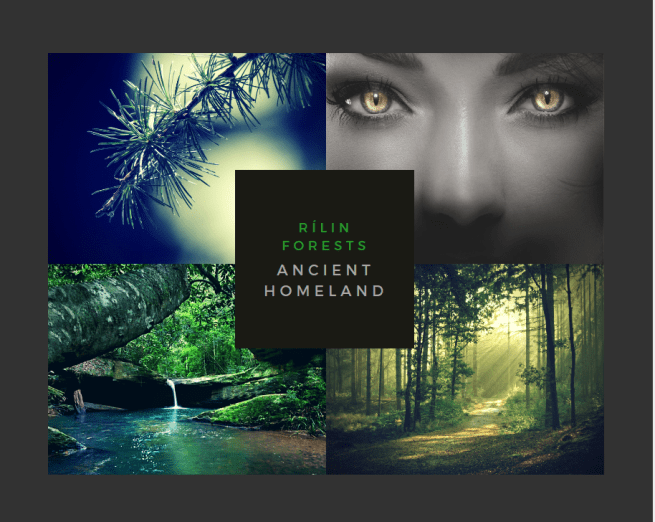
More moodboards for places in Aeniith. The Tosi Empire (mostly warm and arid, large, lots of military forts and castles and such, female-ruled society, imperialistic, etc), and the Rílin forests of northern Izoi (same continent mostly): cool, green, good for hiding, and actually toxic to most non-Ríli. The Tosi invaded them anyway for resources but the Ríli will eventually win this long war for their homeland, though not without great cost.


tosimoodboardrilinmoodboard

Ori needed more declensions?

I decided Ori needs more nouns declensions. 😛

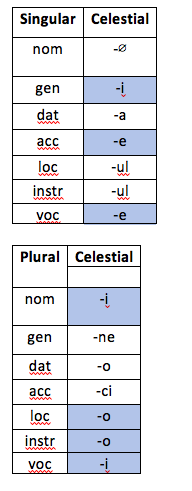
So here are two new celestial class declensions.

2nd declension (celestial)

These nouns often end in -n or -m.

Btw, the -∅ symbol in linguistics means ‘null’ or ‘nothing’. So that means the nom. sg. forms don’t add a suffix.

image

Using Calcurassen’s name as an example (in the singular, of course–there is only one of the God of Justice):

Calcurassen ryintat trulali ‘Calcurassen drinks wine’

Ti-clespes Calcurasseni astere lya. ‘Calcurassen’s jewel is bright’

Murlinis Calcurassene iyuru ‘A raven sees Calcurassen’

Hensapya Calcurassena maroi cyan ‘I gave praise to Calcurassen’

Calcurassenul minim cyan nalemapya peli. ‘By means of Calcurassen, I was able to find justice’

Hestinyal Calcurassenul lya. ‘Hope lies with Calcurassen’

Oa, Calcurassene! Maropye tyeli abarig! ‘Oh, Calcurassen! Give us blessings.’

~

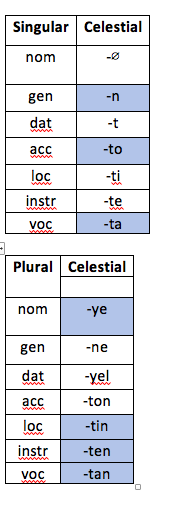
The next declension is also for celestial nouns–most of these ending in vowels.

3rd celestial declension

image

Examples:

Ti-hembe lilya rya. ‘The body of fresh water is small’ (Note that ‘small’ still agrees with embe–it just uses a different celestial (nom sg. suffix, the one from the very first celestial declension I introduced, which is -ya rather than -∅.)

Culleryal caben bellu. ‘The expanse of the world is wide’

Gilupye yalutyin tatyin ti-trahellet ‘Turn your eyes to the meteor shower’

Ok, you get the idea. 🙂

~

Mintaka

Orikrindian pantheon (pt 3)

Next installment of the Orikrindian pantheon. This one focuses on the sea goddess and her half-mortal son.

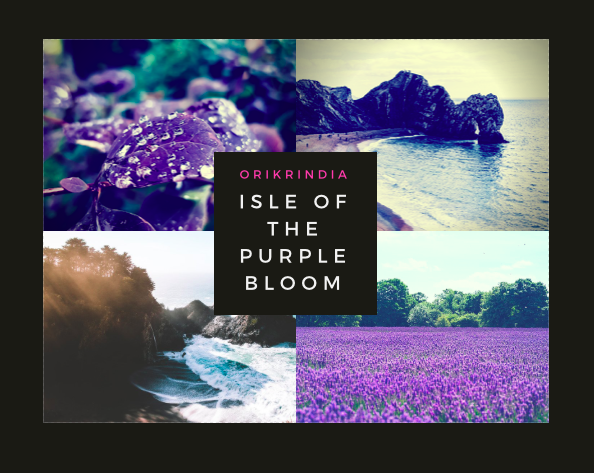
One thing I want to note is the pervasiveness of the pantheon. These gods are recognized not only in Orikrindia itself, but also across eastern Ei. Some in Quarios also worship these gods, especially Orikrindian immigrants (such as Elucuna, of course). They did, however, originate with the native inhabits of Orikrindia (the island, rather before the “nation” itself was a thing), so they are referred to as gods of Orikrindia in Aeniith itself (as I will continue to call them in meta-documentation too). Worship practices do vary per region. My descriptions here apply to traditional methods in Orikrindia.

~

Lumaya

Lumaya is a goddess who has domain over water. Primarily, she is associated with the sea, although her influence extends over all bodies of water. She is said to be the younger sister of Hestaya and Moltirin.

In Orikrindian depictions, she has pale blue skin and hair of seagrass. Sometimes she takes the form of a seal, and it is for this reason that Orikrindians, unlike some neighbors, do not eat the flesh of certain species of seals.

One of the powers of Lumaya are her eyes, which appear like swirls of abalone and are thought to be able to enchant those who stare into them. This is the origin of Orikrindian belief that gazing into the sea for too long can be dangerous to mental health.

Lumaya has temples by the edges of the sea. They are usually decorated with items that reflect the local maritime life and culture: carved driftwood, sea glass, shells, pearls, and other findings from nearby the temple. The priestesses of Lumaya are known to be “sponsored” by the national navy of Orikrindia.

Prayers to Lumaya are offered especially during certain very strong tides. She is revered by all mariners, who usually have an altar to her in their homes. Since most mariners in Orikrindia are men, this is probably the one female goddess that is worshipped mostly by men in Orikrindia. The devotees of Lumaya are some of the most vocal and open, possibly due to the island nature of Orikrindia as a country. Naval military successes are frequently credited to Lumaya’s blessing.

Epithets: Halumaya (Lumaya the Great, lit. ‘Great Water’), Ti-Hendessaya Cacalsaya (’The Infinite Sea’), Tu-Hemas Heltasye Plesstolsye (’the Lady of the Cerulean Voice’), Co-Lyosyal Tun-Golinorisi ‘The Grief of the Weak’), Syalanyas Culimyenya (’Queen of Journeys’), Tu-Syalanyas Yalunt Tellened (’The Queen of Star-eyes’), Tu-Hemas Estolis (’The Blue Lady’).

Giessembe (demi-god)

This is the child of Lumaya, Giessembe, who has control over bodies of fresh water. He is often depicted as a small child, a demi-god, who was conceived by Lumaya with a mortal man. The story of their meeting and relationship is told in the Ori epic poem Ti-Clespes Endessonisye na Bestini (’The Jewel of the Great Sea and the Earth’).

Giessembe’s name means ‘calm fresh water’, with embe being the word for any general body of fresh water.

In Orikrindian legend, Giessembe was sent to prove himself as an adult divine being, since he was weak as a baby, despite being a half-god. He was challenged by Apyolus, god of fire, to quell the fires of the mighty Cetispeltaya, a volcano whose summit cut through the fabric of the heavens. To accomplish this, he asked his mother to cause the sea to evaporate into clouds above the world, and a great rain fell for ten days without cease, and filled the fresh water streams and rivers. He then called on Moltirin to cause the trees of the forests to lie on their bellies so that his waters could flow freely around the world. Peltas (of the Twin Gods) was asked to make time flow quickly along the rivers so all the waters would surge across the land. Thus was Giessembe able to seep his waters down inside the earth (with the help of Hestaya) and extinguish the mighty volcano from the inside out.

Giessembe used his method of extinguishing the fires as a living hymn and tribute to the gods who had helped him, impressing Apyolus so much that he granted Giessembe the greater powers that were due him as a fully grown demi-god.

Epithets: Tu-Plenis (’The Half’), Tu-Prastanes (’The Clever’)

~

Mintaka

Legend and Lore: The children of Hestaya (a poem)

In Orikrindian myth, Hestaya (the mother goddess, the goddess of the mountains and earth) bore 12 infants, which were conceived beneath the hardest rock in the earth, fathered by the fire god, whose life blood flows under the world as magma. The twelve children were born upon twelve hills that encircle the island of Orikrindia. In legend, the children were found by nomads of a group called the Lost Ones. The queen of this people, Crestellin, was the first to find one of these children, and then, one by one, she and her handmaidens found all twelve. She was a childless queen before this moment, but adopted the babies into her family and raised them as her own. According to legend, these demigod children grew into the founders of the twelve great cities of Orikrindia.

This poem is about Crestellin finding the first of the children of Hestaya.

~

Moving like a green snake

In the dewdrops

A fragmented line of tiny sighs

Blooming life along the dusty horizon.


Clinging still to mother

Unwilling to relinquish

That summer warm smell

Of newborns and flowers and vegetables

Singing in the sweltering heat

Humming with an old life


You know who they were

The ones who came before

The earthy faces digging themselves out from under hills and mounds

Stones in the dusk

In the distance,

They approached

Farther and farther

Until we heard their breath

Whispering and scraping in the evening air

Like leaves against your cheek.


We took them in

Opened our wings

And drew in these

Infants.


We gave them the instincts

We had left,

Pretending

To be mothers

Pretending

To understand beyond the eons

What we were doing.


The children of the stone

The babies found

In the earth                            

Creeping into humanity

Latching onto a nipple

They were lucky to find


Vines covering the tomb

An ancient space

Threshold to a world beyond

We remained and named the children

After the wish of the Mother,

Hestaya.


~

Mintaka


Orikrindian pantheon (pt 2)

Here are a few more members of the Orkrindian pantheon. Let me know what you think!

Orikrindian pantheon

Pultas & Peltas

 The Twin Gods—consisting of a brother and sister. Pultas (the brother) represents the past: wisdom, tradition, caution, prudence, understanding, experience, knowledge, but also implies regret, resentment, and weariness. Peltas, his sister, is the future. She represents ambition, vigor, intuition, risk-taking, daring, innovation, creativity, but also foolhardiness, misguidance, naïveté, childishness, and lack of attention.

As an individual neither can exist, for both are defined in terms of the other. Together they are worshipped as Time, or Sortas in the Ori language.

Epithets: Tin-Buta (The Two), Tun-Plembiltasa (The Twins), Tun-Biltasa (The Children), Lilemas na Liloris (Girl and Boy).

At their altar (the share one), people leave items that refer to or represent the dual nature of Sortas (e.g. double-tined forks, calpabeans (which have two kernels within one shell), double fruits).

Twins are sent upon their first birthday to be blessed by a priest or priestess of Sortas, and many twins end up becoming clergy of Sortas themselves, usually serving in the same temple together.

Sortas is one of the most represented in sculpture of the Orikrindian gods. Their statues can be found in almost every town over a certain size (>20k population, typically), and cities usually have more than one statue of them. They are often depicted intertwined together, or as two sides of the same person. Often, they are shown with an hourglass in one of their hands. Pultas may hold a skull or a book and Peltas may hold an infant or a fruit.

Calcurassen

Calcurassen is the god of justice, law, and order. He is called Arbiter of the World and Father of the Law. His domain is the taming of chaos and the establishment and maintenance of order in the world of his people.

Often depicted as an elderly man with a long beard, he wears the Robe of Forethought and golden diadem on his head. The jewel in this diadem is called the Jewel of Truth (Ti-clespeya Nalemasye) and can reveal any falsehoods told. Devotees of Calcurassen will often wear a clear jewel (often quartz) around a chain on their neck to indicate their devotion to the god of justice.

Epithets: Tetuya Nalemasye (Father of Truth), Tu-Calisoris (The Arbiter), Tu-Haneris (The Good Man), Tu-Gintes (The (Paternal) Uncle), Tu-Calpas (The Strength).

Asteren 

Asteren’s name means Light. He is the god of knowledge, learning, wisdom, logic, and reason. He is also the patron god of music, art, creation in general, and skilled work of many kinds (various artisanal works, such as sculpture, metalwork, ceramics, woodworking, ship-building, architecture, weaving, etc.)

He is often depicted as a young man dressed in scholar’s robes (blues and purples, usually). He hair is worn long, as is the style of scholars in Orikrindia, and he wears purple gems on his fingers (purple is the color of scholarly class in western Ei and Orikrindia).

His temples are essentially schools. For a rather generous fee, one can become a devotee of Asteren, and receive an education like none other in Orikrindia. Many young nobles are educated in the temples of Asteren, and even some foreigners who travel to Orikrindia.

Epithets: Tu-Selisis (The Teacher), Ayaloris (Opener), Ti-Nelcaya Nulyuya (The Tall God), Sullinseris (He Who Makes It [Knowledge] Flow), Tu-Taris (The Speaker).

Asteren is also described using metaphors of water; the water represents knowledge and Asteren himself is sometimes spoken of as a spring or well of water, allowing knowledge to flow throughout the world and the minds of his worshippers. The common prayer “Receive with a goblet” is written about Asteren in this manner.

~

Mintaka

Orikrindian Lore and Legend: The Horn of Ellessia

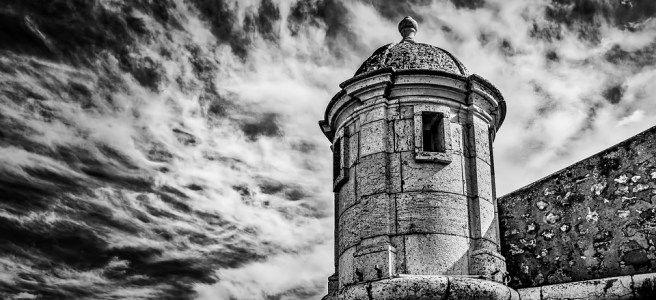
In the northern-most reaches of Orikrindia is a region called Ellessia. It is one of the six provinces of the county. It is known for its very harsh and cold climate, including bitter sea storms from the northern coast. The people who live there must be not only tough and resilient, but also extremely skilled and knowledgeable about the land and their environment. Along this frigid northern coat was found an ancient artefact, called the Horn of Ellessia. It is a battle horn from eons past, found in the burial tomb of a long-forgotten king.

Soon after the horn’s rediscovery, it went missing. The earl of Ellessia, assuming the horn belonged to some ancestor of his, put out a reward for its recovery. This led to a long and bloody conflict, however.

So great was the reward for the Horn of Ellessia, that many forgeries were made, and various dishonest persons tried to claim the reward money, subsequently ending up in the Ellessian dungeons for their trouble.

In fact, the forgery problem became so widespread, that the earl started to have his men invade the workshops of armorers and craftsmen who were even suspected of forgery. Properties were destroyed, people were injured, and a few even were killed. Thus was the brutality of the Ellessian soldiers.

This continued for a few weeks until a riot broke out in the main city of Ellessia, and even more were killed.

Finally, after much strife, the actual Horn of Ellessia was recovered, by a woman called Ecnasia. She sent a detailed painting of the horn to the earl, and such was her skill and the level of detail in the depiction that there was no doubt she was in possession of the real item. She claimed, via a letter, to have been the original theft of the Horn, and also claimed to have been the one who started giving instruction to various artisans to try and replicate the Horn in an accurate way—but just inaccurate enough that they would be sure to be caught. Thus, she explained, she eliminated many artisans and armorers who were her competitors in the market, as female armorers were not popular in Orikrindia.

Ecnasia agreed to relinquish the desired horn only upon condition that she be given full pardon for her crimes and that no word of her machinations be made public to hurt her business in Orikrindia. The earl, being possessed of cruelty but moreso of greed and a lust for glory to his name, agreed.

The Horn was returned to the earl and Ecnasia returned to her business, short quite a few competitors.

However, 20 years later, the Horn disappeared once again from the palace of the earl, and has not been found since. Rumors surround its disappearance, and people speak of a curse of the ancient king whose grave it was robbed from. No one knows where the Horn May lie today, but few are willing to speak of it for all the strife it caused before.

Mintaka