Orikrindian Lore and Legend: The Horn of Ellessia

In the northern-most reaches of Orikrindia is a region called Ellessia. It is one of the six provinces of the county. It is known for its very harsh and cold climate, including bitter sea storms from the northern coast. The people who live there must be not only tough and resilient, but also extremely skilled and knowledgeable about the land and their environment. Along this frigid northern coat was found an ancient artefact, called the Horn of Ellessia. It is a battle horn from eons past, found in the burial tomb of a long-forgotten king.

Soon after the horn’s rediscovery, it went missing. The earl of Ellessia, assuming the horn belonged to some ancestor of his, put out a reward for its recovery. This led to a long and bloody conflict, however.

So great was the reward for the Horn of Ellessia, that many forgeries were made, and various dishonest persons tried to claim the reward money, subsequently ending up in the Ellessian dungeons for their trouble.

In fact, the forgery problem became so widespread, that the earl started to have his men invade the workshops of armorers and craftsmen who were even suspected of forgery. Properties were destroyed, people were injured, and a few even were killed. Thus was the brutality of the Ellessian soldiers.

This continued for a few weeks until a riot broke out in the main city of Ellessia, and even more were killed.

Finally, after much strife, the actual Horn of Ellessia was recovered, by a woman called Ecnasia. She sent a detailed painting of the horn to the earl, and such was her skill and the level of detail in the depiction that there was no doubt she was in possession of the real item. She claimed, via a letter, to have been the original theft of the Horn, and also claimed to have been the one who started giving instruction to various artisans to try and replicate the Horn in an accurate way—but just inaccurate enough that they would be sure to be caught. Thus, she explained, she eliminated many artisans and armorers who were her competitors in the market, as female armorers were not popular in Orikrindia.

Ecnasia agreed to relinquish the desired horn only upon condition that she be given full pardon for her crimes and that no word of her machinations be made public to hurt her business in Orikrindia. The earl, being possessed of cruelty but moreso of greed and a lust for glory to his name, agreed.

The Horn was returned to the earl and Ecnasia returned to her business, short quite a few competitors.

However, 20 years later, the Horn disappeared once again from the palace of the earl, and has not been found since. Rumors surround its disappearance, and people speak of a curse of the ancient king whose grave it was robbed from. No one knows where the Horn May lie today, but few are willing to speak of it for all the strife it caused before.

Mintaka
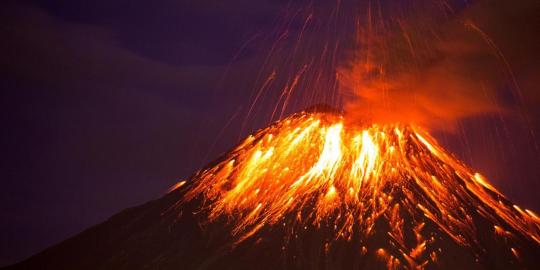
Working on the pantheon of Orikrindia. This is part 1, the first three members.

~

Orikrindian pantheon

Apyolus– Father God – God of Fire, Lava, Volcanoes, War, Season of Summer, the Sun (Worshipped as Force of Creation, as a Progenitor of all life, a driving mechanism of all living things)

Epithets: Ti-Hasterya Apyasye (The Light of Fire), Ti-Lyaya Iyutreseya (The All-seeing Sun), Yalus (Eye), Tetuya Huseya (First Father), Ti-Hupuse (The Knowing), Yoris (Watcher)

Apyolus is worshipped as a creator of life, a driver of existence. Without Apyolus it is believed all things would be as dead and empty husks, existing the likeness of life but without the crucial spark of consciousness.

The priesthood is Apyolus is all-male and open to those who have fathered at least one child. Their temples tend in be in cities, at the feet of volcanoes, and in the southern most reaches of Orikrindia. In the summer is the Festival of Fire, wherein people make material sacrifices to the fire in hopes of gaining such boons as: fertility/children, health good crops, warmer weather in winter, renewed physical and mental vigor.

Hestaya: Mother Goddess – Goddess of the Mountains, Air, Wind, Cold Weather, Snow, Ice (Worshipped as a stable force in the world, a protector, defender) –

Epithets include: Ti-Nimaya (the Mother), Ti-Nimaya Balnyeya (the Great Mother), Nimaya Coruni (Mother of Stone), Corus Cacalsas (Undying Stone), Crestenya Astersye (Kindler of Light [e.g. lightning via storms])

Prayer to Hestaya:

‘The solidness of the mountain

of stone

of ice

the movement of wind

the forbidding power of storms

the threat of winter

the protective blanket of snow covering the earth,

this our Mother

the Mighty

and the True

the One Who Covers,

The Kindler of Light

The Mother of Stone,

Undying and Eternal

Her light will find you

In the dark

Her stones surround you

Where no enemy can pierce’

Moltirin– Goddess of the Forest:also matron goddess of mysteries, vengeance, the past, memory, rebirth/reawakening, justice, lost things, women who have died in childbirth, dead children, men who have died in battle, storms, and those who have been wronged.

Associated with: birds of prey (especially ravens and vultures and other carrion creatures), wolves, snakes, spiders, vines/plants/trees, the color green/black/grey

Epithets: Ti-Roruya (The Dark), Cyentas Nastas (Wise Aunt), Emas Tin-Mulyurana (Woman of the Forests), Cyeltenalenya (Revenger), Murlinis (Raven)

Moltirin is equally feared and loved. She is the sister of Hestaya, who is married to Apyolus.

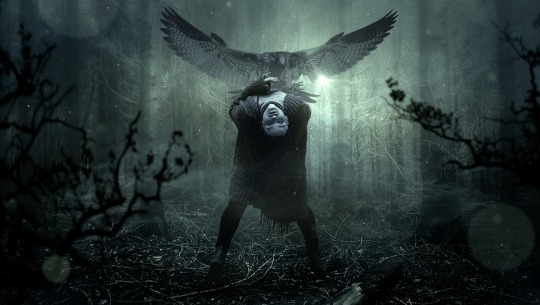
She inhabits all forests and is a very mysterious figure, rarely responding to the entreaties of humankind. When she does, though, it is with ferocity and sincerity. Moltirin may take the form of a young or very old woman. Prayers to Moltirin are given by those who have been wronged, those who are lost, who are pariahs, those whose honor has been destroyed (either by themselves or others). She is a protector of women and children, occasionally protecting them via deception or violence. She keeps the souls of those who die within her woods, as well as the souls of the drowned. These spirits are said to wander the places where they died, as it is there that they are with Moltirin.

Devotees to Moltirin often live in forests as hermits or wise women. They, like their goddess, are both feared and respected. Many work as apothecaries as well, specializing in both healing substances and poisons. In Orikrindia, one might visit a Woman of the Woods (as they’re typically called) to procure a less-than-legal concoction for whatever need.

Story: Elucuna in Quarios

This is the beginning of story (of indeterminate length so far) told by an Orikrindian woman who leaves Orikrindia at age 15 and comes to Quarios to be able to pursue a life a greater liberty (Orikrindian society doesn’t offer a lot of independence or a very wide array of options for the future of a yong woman). Like I said, I still don’t know what’s in store for this story, how well I’ll end up liking it, how well anyone else will end up liking it, etc. If you DO want to see more, I’ll probably consider continuing it. Its main purpose now is to help me explore Orikrindian vs Quariosian (i.e. Gotevian and Lomi) cultures, as well as a peak into some other Aeniithian cultures/people/stuff. 😀

Continue reading “Story: Elucuna in Quarios”

Upcoming works are brewing…

I’m writing some mini-stories about Orikrindians that I will probably post in the future. Topics may/will include:

– An Orikrindian girl who leaves her country at age 15 and moves to Quarios, some of her thoughts, motivations, and memories (telling her story in retrospect)

– Two Orikrindian brothers who are separated due to a war with a neighboring country

– A story of the devotees of the mountain goddess and fire god who go on a pilgrimage to a great mountain. Fewer will descend that those who went up

I’m also recording new poems in Rílin now, since I am finally back in touch with my h4n Zoom audio recorder, which is higher quality than my laptop mic, unsurprisingly.

Other topics in the works: more Ori grammar, the Orikrindian pantheon, and info on Orikrindian artisanal works.

This has been a semi-update with a bunch of teasers…but I’m really excited about what I’m working on so it’s ok. 😛

Mintaka

A song in Rílin (Bve Pfa R̂í)

So this is a song I recorded a long time ago (like ten years ago lol) that I wrote even longer ago in Old Rílin and Rílin. I was originally inspired by the lush vegetation in southern Georgia when I was visiting there a long while ago. The first verse is in Old Rílin and the rest in Rílin. I imagine it could be from the perspective of a Ríla visiting a southern country (as they are native to the northern half of Izoi and thus would not have experience with certain types of biomes, perhaps being very impressed by certain plants and trees as I was).
Composition, vocals, and lyrics are all by me. Piano arrangement and performance credit goes to Eric Barker (www.ericbarker.com).

http://www.whitealicemusic.com/music/BvePfaRi.mp3

Lyrics are below:


Bve Pfa R̂í

(old Rílin)


Bve Pfa R̂í

/bve pfa ʂi/

tree blue yearn

‘yearning green’


Goxe

/goxe/

stir

‘stirring’


bi-ly

/bi’ly/

seed-push

‘seeds springing forth’


bil-i

/bi’li/

innerground-wet

‘moist soil’


naqa r̂í

/naqa ʂi/

gentle yearn

‘gentle yearning’


na genk

inf sleep

‘to sleep’


re kanad

/ɾe kanad/

out.of forest

‘out of the forest’


be

/be/

smile

‘a smile’


(modern Rílin)


Phala tösh

/ɸa-la tøʃ/

air-instr ash

Ash in the air


Aghu

/aɣu/

Blind


Wunís myrûí

/wunis myɾʌi/

breath burning

Breath burning


(instrumental)


pilu ní

/pɪlu ni/

center.of.flower clear

Clear center of a flower


uka

/uka/

Companion


Be ŕíky zöet

/bɛ ʐi-ky zø-ɛt/

neg expel-imp trust-abs

don’t expel trust


Despyxa

/dɛspyxa/

Paper of tissue


Moías

/mɔias/

Tapestry


Kaíkr̂ŭ ŝala

/kaikʂɯ ʃa-la/

warmth.from.light petal-instr

Warm light through the petals

Orikrindian women abroad

I envisage Orikrindia as more patriarchal than most other Aeniithian cultures. I image this is demonstrated in everyday culture as well as by institutions such as the monarchy of kings. For this reason I think Orikrindian women would take to moving abroad if they could to pursue things that would be more difficult to do at home. Pursuits like business, art, finance, scholarship, etc. I think quite a few would go to nearby Ei to the west to Quariosian territory. Some would go directly to Quarios itself if they could afford it. I think perhaps some would marry abroad as well, as Gotevian and Lomi men would be more accepting of an independently minded woman.

I want to explore this concept more but for now it is a blurb!

Mintaka

Conlang/conculture: Ori(krindia): (temples, quick note on ‘s’, independent pronouns)…

Alrighty.

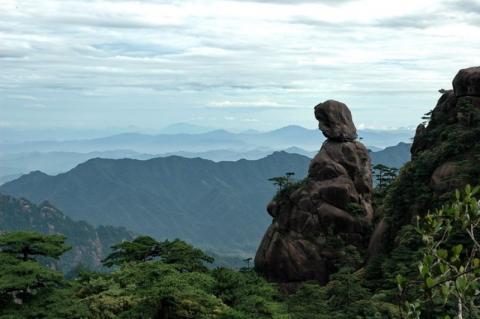
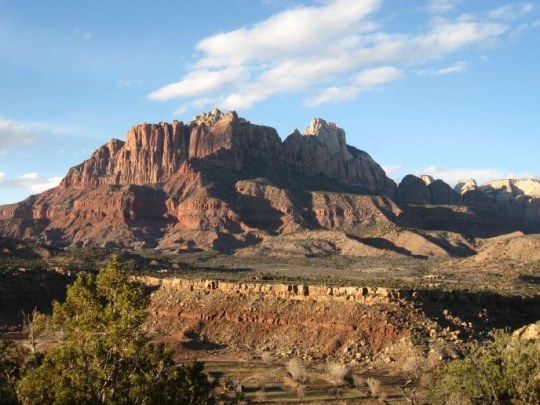
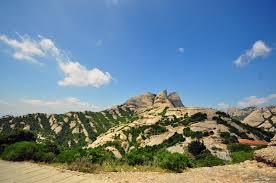
I am posting some photos of cliffs and mountains like this, since this is how I envisage some of the Orikrindian temples appearing, situated high in the mountains and built into the rock itself. My feeling at this point is one of their primary deities of their pantheon is a mountain goddess who is seen as a mother, supporting and giving life to many other smaller gods who represent entities that dwell on or around the mountain. I know there is a god that is represented by fire/volcanoes, since those are everywhere in Orikrindia. Somehow I want connect the fire god/mountain goddess in a kind of symbiotic relationship. I’m not sure how yet.

~

One more small note on noun cases: I failed to mention that any nouns ending in -s are a little different. I noted that nouns ending in stops (oral or nasal) got an epenthetic -i- inserted before the main case ending for their class. Other final consonants like -r and -l do not. -s however is a little different. In certain respects, it follows the pattern of -l and -r in that it doesn’t get an epenthetic -i-, but in other instances, it does. See below for examples. Note which cases use the epenthetic -i- and which do not.

Inanimate noun: holis ‘door’

Animate noun: selis ‘teacher’

Celestial noun: tus ‘beam of light’

Abstract noun: lyos ‘grief’

nom sg: holis-is OR holis-∅; selis-is/selis-is; tus-ya; lyos-yal

gen sg: holis-ni; selis-ire; tus-sye; lyos-sye

dat sg: holis-im; selis-te; tus-ilya; lyos-lu

acc sg: holis-t selis-t; tus-pya; lyos-pya

loc sg: holis-il; selis-le; tus-cya; lyos-cu

instr sg: holis-ir; selis-in; tus-cya; lyos-ce

voc sg: holis-ca; (all use -ca)

nom pl: holis-sa; selis-sa; tus-ta; lyos-ta

gen pl: holis-ni; selis-si; tus-na; lyos-nya

dat pl: holis-mi; selis-ti; tus-lo; lyos-bi

acc pl: holis-tyin; selis-tyan; tus-ig; lyos-gya

loc pl: holis-len; selis-ic; tus-id; lyos-tya

instr pl: holis-ip; selis-int; tus-id; lyos-tya

voc pl: (all use -ca)

~

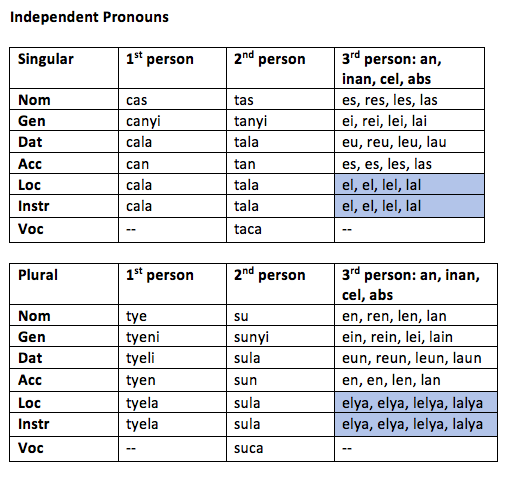
So we have looked at the case system for full nouns of all classes. Now it is time to look at independent personal pronouns. Ori does mark the subject of the verb as a suffix, but it also includes personal pronouns that are not attached to the verb. See the chart below for how these pronouns exist in each case. Note that third person pronouns are irregular, and also that they exist differently for each class.

These pronouns can be made reflexive by the addition of the suffix -(i)cye:

canicye iyum cyan ‘I saw myself’

Example of pronoun use:

Cala ipalnda ‘I like them’ (lit: they are pleasing to me)

Tan yubru! ‘We see you!’

Elya abarita tresita ummultu ‘In them all blessings lie’

Maropye en eun! ‘Give it to them!’

Lye-trumat suhit ryesubru cyan na tyeli ipalir cyan ‘We sipped the red nectar and it pleased us’

Eu lye-tepet maroi cyan ‘I gave her the fruit’


~

Mintaka