

In addition to working on the Vinuvu abugida, I’ve also been creating a new conscript, called Zezhi. It is a syllabary, and is used in Keta, specifically in and around Ngyenau Bwezh, a small country in Ei (north of Quarios). I have the beginnings of a majority language of Ngyenau Bwezh, called Bwezhi, but it’s far from usable yet. It’s at that awkward stage where I know what the phonemes are and some basics about verbs, nouns, and word order, but not much else. It is essentially a fetus.
Zezhi itself has independent symbols for combinations of consonants and vowels, in the CV syllable structure. It also has symbols for lone vowels: V structure. It doesn’t have codas embedded in each symbol, but rather marks a “default” syllable as “vowelless” for this purpose, as Bwezhi does have some codas.
Here are some examples:
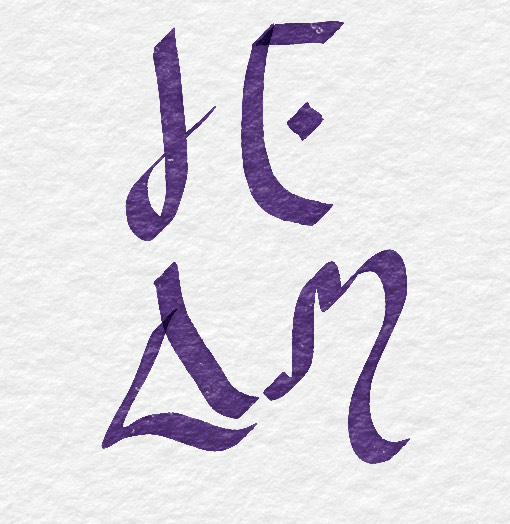
This is a given name: Miza Lie
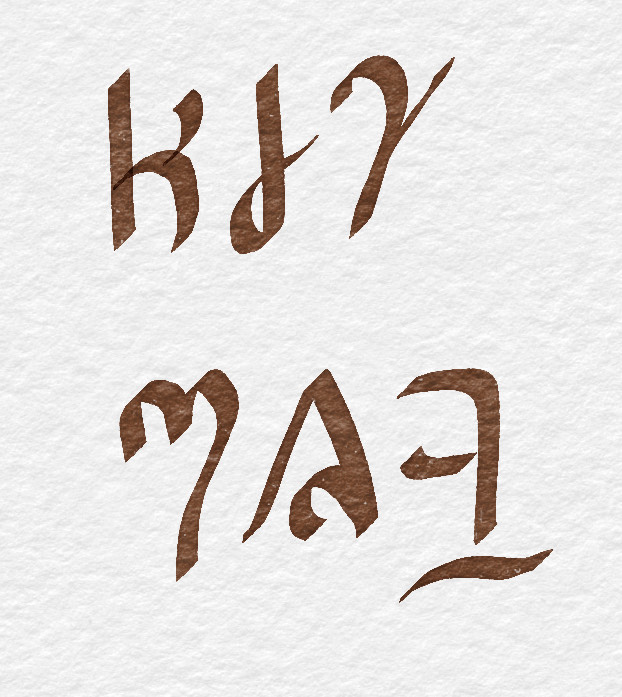
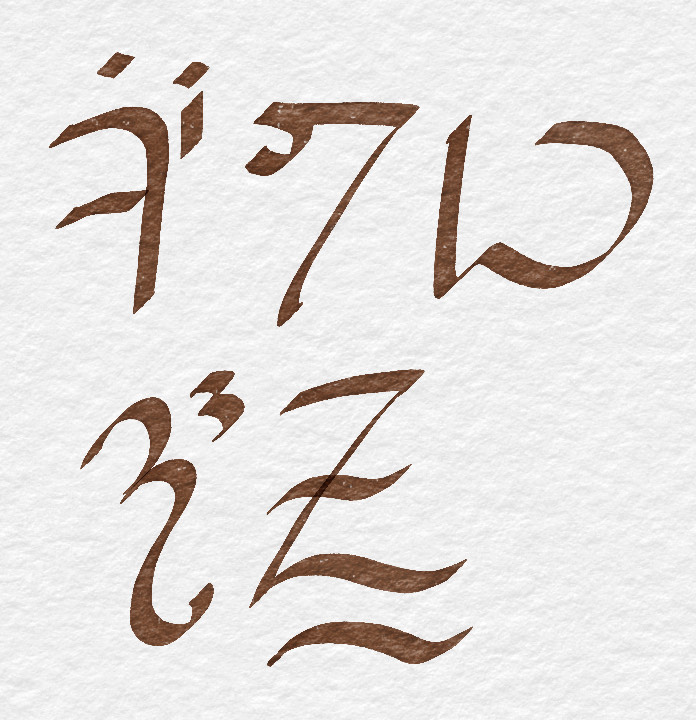
nsonants. The line under the final character means that there is a null vowel after this consonant, i.e. a syllable coda. You can also see that in the previous name “Burun”. The character used for codas is always the Ce (consonant plus /ɛ/) character. So without the line underneath, the name would appear as “Burune”.
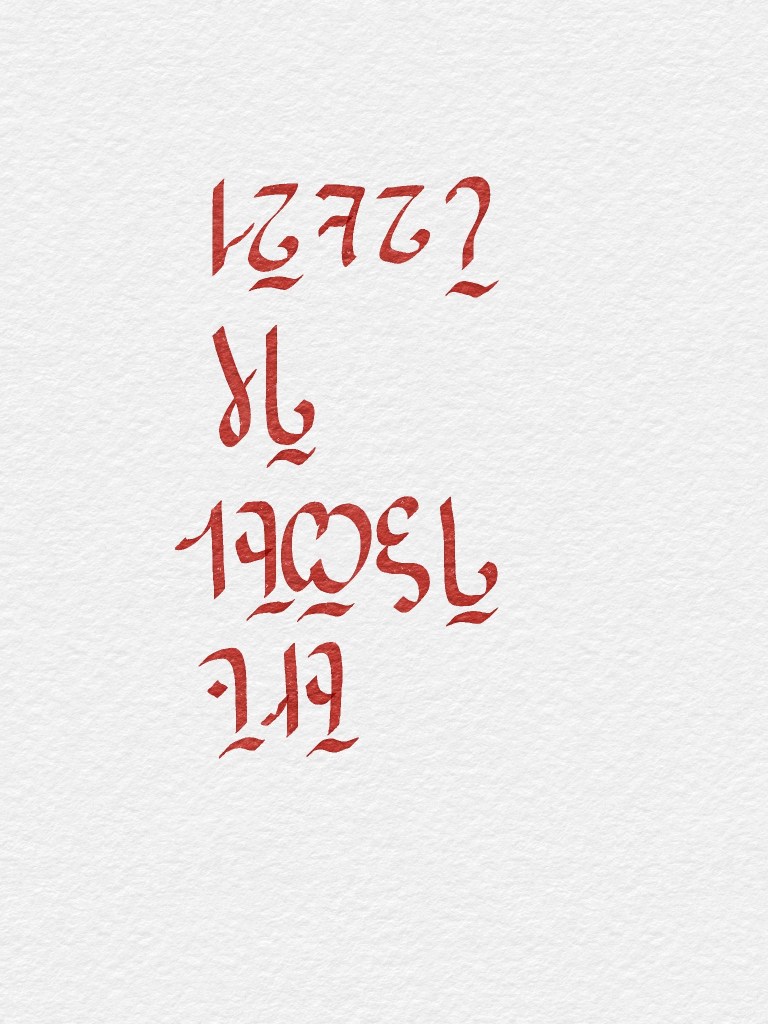
Below is a transliteration of my full name: Margaret Neal Ransdell-Green.
 Aeniith: A Constructed World